


What Is EYFS? A Practical Guide for Educators
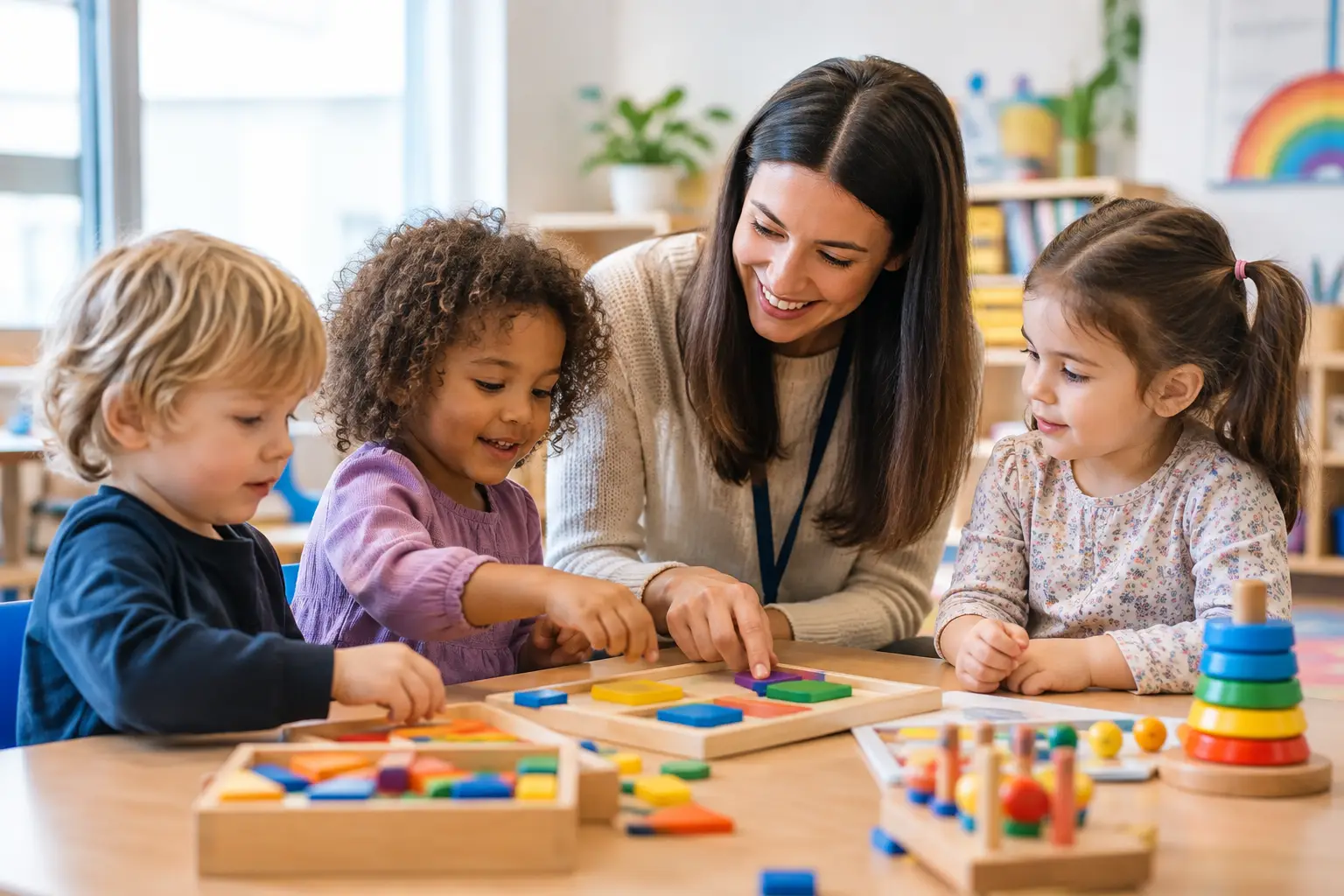
A child carefully arranging shells by size, negotiating who will use the last paintbrush, or retelling a story in the home corner is doing far more than ‘keeping busy’. These moments give educators rich evidence of thinking, language, relationships and developing confidence. If you have been asking what is EYFS, it is a framework designed to help adults recognise, plan for and extend precisely this kind of meaningful early learning.
The Early Years Foundation Stage, usually shortened to EYFS, is the statutory framework for early education in England from birth to the end of Reception, typically age five. Its value reaches beyond the UK, however. For educators in Sri Lanka and other international settings, it offers a thoughtful, child-centred way to connect curriculum intentions with what children actually do, say and explore each day.
What is EYFS and why does it matter?
EYFS sets out the standards that early years providers in England must meet for children’s learning, development and care. It is not a scheme of worksheets, a timetable to follow minute by minute, or a checklist that every child must complete at the same speed.
At its heart, EYFS starts from a simple but powerful principle: every child is unique, learns through relationships and develops best when learning is active, playful and responsive to their interests. Adults have an essential role, not as spectators, but as skilled observers, planners, communicators and co-players.
For international educators, EYFS can be especially useful as a lens for practice. It provides shared language for discussing child development, environment design, purposeful play and assessment. It can enrich an existing curriculum without replacing local values, community knowledge, home languages or national requirements.
This distinction matters. The Sri Lanka National Early Childhood Education Curriculum Framework should remain the foundation for provision in Sri Lankan settings. EYFS principles can help teachers bring its areas of learning to life through inquiry, themes, routines and carefully planned experiences.
The four principles behind EYFS
EYFS is built around four principles that shape every decision, from settling a new child into nursery to planning a garden investigation.
Every child is unique
Children arrive with different experiences, temperaments, languages, interests and stages of development. A confident speaker may need support with turn-taking; a quiet child may show remarkable mathematical thinking while building. EYFS encourages educators to notice strengths first, then identify the next small step that will help each child progress.
This means avoiding assumptions based on age alone. Development matters, but it is not a race. Children benefit when expectations are ambitious and flexible rather than identical for everyone.
Positive relationships make learning possible
Young children learn best when they feel safe, known and valued. Warm, consistent relationships with adults give children the confidence to explore, make mistakes and ask for help. Partnerships with families are equally important, because parents and carers hold valuable knowledge about a child’s language, culture, interests and wellbeing.
In practice, this can look like a teacher getting down to a child’s level, listening closely, naming feelings and following through on a promise. These small interactions are not separate from learning. They are the conditions that make learning possible.
Enabling environments invite exploration
An enabling environment is more than an attractive classroom. It is a space organised so children can make choices, access materials, revisit ideas and take appropriate risks. It includes the emotional environment too: children need to know that their questions, attempts and imaginative ideas will be welcomed.
Resources do not need to be expensive to be effective. Loose parts, natural materials, books, open-ended art materials, water, blocks and familiar role-play objects can create deep learning when adults use them intentionally. The key question is not, ‘Does this activity look impressive?’ but, ‘What might children think, communicate, practise and discover here?’
Children learn and develop in different ways
EYFS identifies three characteristics of effective teaching and learning: playing and exploring, active learning, and creating and thinking critically. These describe how children learn, rather than simply what they learn.
A child who returns to a challenging puzzle is showing active learning. A group testing which materials float is playing and exploring. A child changing a tower design after it falls is creating and thinking critically. When teachers observe these learning behaviours, they can plan experiences that build resilience, curiosity and independence alongside subject knowledge.
The seven areas of learning
The EYFS framework organises learning into seven connected areas. The three prime areas are communication and language; physical development; and personal, social and emotional development. These are particularly important in the earliest years because they support children’s ability to relate, communicate, move, regulate and engage.
The four specific areas are literacy, mathematics, understanding the world, and expressive arts and design. They become increasingly significant as children’s confidence and capability grow.
The separation is useful for planning, but children do not experience learning in separate boxes. Consider a simple activity such as making fruit salad. Children may develop fine-motor control while peeling or cutting soft fruit, use vocabulary to describe taste and texture, count portions, discuss where fruit grows, collaborate with friends and create a pattern with the finished pieces. One real experience can touch every area of learning.
This integrated approach aligns well with theme-based and inquiry-based practice. A theme such as ‘Our Community’ should not become a collection of unrelated crafts. Instead, it can begin with children’s questions: Who helps us? How do vehicles move? Where does our food come from? Teachers can then offer books, visits, role play, mapping, construction and creative materials that deepen the inquiry.
Assessment in EYFS: noticing before recording
One of the most helpful messages within EYFS is that assessment should improve teaching, not create unnecessary paperwork. Effective assessment begins with observation: watching closely, listening carefully and considering what a child’s actions reveal about their understanding.
An observation is most useful when it leads to a professional decision. Perhaps a child can recite numbers but does not yet understand that the final number counted tells how many objects there are. The next step might be a small-group game of sharing cups at snack time, rather than another written number task.
Written records have a place, particularly when they help teams communicate, identify patterns or share progress with families. But recording every moment can pull attention away from children. A balanced approach keeps the educator present in the interaction and uses documentation with a clear purpose.
In England, EYFS includes the Early Learning Goals, which describe typical expectations by the end of Reception. Outside England, they can be a useful point of reference, not a label to attach to children or a target to force prematurely. Context, language, additional needs and children’s individual development must always shape interpretation.
Bringing EYFS ideas into a Sri Lankan setting
The strongest use of EYFS is not copying a British classroom. It is asking better questions about local practice. How can children have more sustained opportunities for play? Where can we use the outdoor area to support physical wellbeing and environmental exploration? How can stories, songs and conversations strengthen language and early literacy in children’s home languages? How can themes emerge from children’s lives and communities?
There are clear connections between EYFS and the Sri Lanka National Early Childhood Education Curriculum Framework. Health and Physical Well-being relates closely to physical development and personal, social and emotional development. Language and Early Literacy, Numeracy, Environmental Exploration and Creative Arts also invite the same kind of connected, hands-on teaching found in high-quality EYFS practice.
The difference lies in thoughtful adaptation. A British seasonal activity may not fit the Sri Lankan climate or cultural calendar. A familiar local market, temple, beach, bus journey, festival or family occupation may provide a far more meaningful starting point for inquiry. International best practice is most valuable when it strengthens, rather than overshadows, children’s sense of place and identity.
What skilled EYFS practice looks like day to day
High-quality EYFS practice is often quieter and more intentional than people expect. The teacher may be on the floor, extending a child’s sentence rather than leading a whole-class lesson. She may pause before stepping in, allowing children time to solve a disagreement. He may add clipboards to the construction area after noticing children making ‘building plans’ in their play.
Planning is still essential, but it is responsive. Educators prepare inviting experiences, teach specific skills where needed and observe what captures children’s attention. They then adjust. Too much adult direction can limit initiative; too little adult involvement can mean missed opportunities for language, challenge and inclusion. The professional skill is knowing when to join, when to model, when to question and when to step back.
For leaders, this requires a shared understanding across the setting. Staff need time to discuss observations, agree expectations for play, and reflect on whether the environment serves all children. A beautiful provision is not automatically an inclusive one. Consider whose culture is represented, whether resources are accessible, how quieter children participate, and whether children with additional needs can genuinely belong.
EYFS is ultimately an approach that asks adults to take young children seriously: their questions, relationships, wellbeing and capacity to think. Start with one area of practice you want to strengthen - perhaps observation, continuous provision or language-rich play - and test a small change with your children. Through live, practical professional learning, Foundations and Futures can help turn that reflection into confident daily practice.


Comments